A washing machine is one of those appliances you rarely think about when everything is working properly. You load the drum, select a programme and expect your clothes to come out clean.
When something starts going wrong, however, it can quickly disrupt your household.
The problem is that washing machine faults are not always obvious. A machine does not necessarily stop working completely when it needs attention. Small changes such as unusual noises, longer cycles, poor drainage or occasional leaks can all indicate that something is not operating as it should.
At NEA Appliances, we always recommend paying attention to changes in the way your washing machine performs. Identifying a problem early can help you understand whether a straightforward washing machine repair is required before the issue becomes more disruptive.
If you are wondering whether it is time to arrange washing machine repairs Bristol homeowners can rely on, here are some of the most common warning signs to look for.
Washing machines naturally make some noise, particularly during the spin cycle. However, you will usually become familiar with the normal sounds your appliance makes.
If that suddenly changes, it is worth investigating.
You might notice:
Before assuming there is a mechanical fault, check that the machine is level and that there are no loose objects inside the drum.
Coins, buttons and other small items can sometimes produce surprisingly loud noises.
If the strange noises continue, however, there may be an issue that requires professional attention.
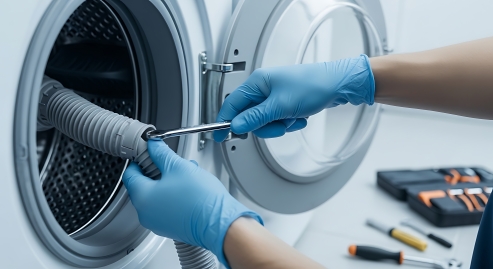
Components within a washing machine experience considerable movement and repeated use, so wear can develop over time. An experienced washing machine engineer Bristol homeowners can call upon to inspect the appliance and identify what is causing the sound.
Hearing something unusual? Contact us for expert advice before the problem gets worse.
Water around your washing machine should never be ignored.
Even a relatively small leak can damage flooring, kitchen units and surrounding areas if it continues.
There are several places where a leak might originate, including hoses, connections, seals and internal components.
Sometimes the cause is relatively straightforward. In other situations, identifying where the water is coming from can be difficult without inspecting the machine properly.
If you notice water around your appliance, switch it off safely and investigate before running another cycle.
Look for obvious issues such as loose connections or visible damage, but avoid dismantling the appliance unless you are appropriately qualified to do so.
Professional washing machine repairs in Bristol can help determine the source of the leak and whether a component needs repairing or replacing.
You expect your washing machine drum to rotate throughout different stages of the programme.
If it stops spinning, spins inconsistently or struggles during a cycle, something may be wrong.
You may first notice the problem because your clothes are unusually wet when the programme finishes.
There can be several potential causes, from relatively simple issues to faults involving internal components.
Before calling an engineer, check whether you have overloaded the drum. An excessively heavy or unbalanced load can sometimes interfere with the spin cycle.
If the problem continues with normal loads, arranging a professional inspection is sensible.
A washing machine repair does not necessarily mean replacing the entire appliance. Depending on the fault, a particular component may be responsible.
Drum not spinning properly? Contact our team for tailored repair advice.
Opening your washing machine to discover a drum full of water is a clear sign that something needs attention.
Drainage problems are relatively easy to recognise.
You may notice that:
A blocked filter or drainage issue may sometimes be responsible, so consult the manufacturer's instructions to see whether there are basic checks you can safely perform.
If you cannot identify the cause or the problem keeps returning, it may be time to arrange washing machine repairs Bristol homeowners can access locally.
A professional diagnosis can establish whether there is a blockage, pump issue or another problem affecting drainage.
You load the washing machine, select your programme and press start.
Nothing happens.
Before assuming the machine has failed, check the basics.
Make sure the appliance has power, the plug and socket appear to be functioning normally and the door is completely closed.
Some washing machines will refuse to begin a programme if the door has not locked correctly.
You should also check whether an error message or code appears on the display.
If the basic checks do not solve the problem, an internal fault may require investigation.
A qualified washing machine engineer Bristol customers can contact can diagnose the issue rather than replacing components through trial and error.
A washing machine that starts normally but repeatedly stops partway through a programme can be particularly frustrating.
You may return expecting clean laundry only to discover the machine has stopped with water or wet clothes still inside.
Several different issues can interrupt a washing cycle.
The important thing is to look for a pattern.
Does it always stop at approximately the same point?
Does an error code appear?
Does it happen on every programme?
Has the problem become more frequent?
Providing this information to an engineer can help with diagnosis.
Repeatedly restarting the machine without understanding why it is stopping is unlikely to address the underlying problem.
Machine repeatedly stopping mid-cycle? Get in touch today and let our team take a look.
Modern washing machines include safety mechanisms designed to keep the door locked while a programme is operating.
If the door will not lock correctly, the washing machine may refuse to start.
Alternatively, you might finish a cycle only to find that the door remains locked.
If water is still inside the machine, the door may remain locked for safety reasons. In that situation, the underlying issue could actually relate to drainage rather than the door itself.
If the drum has drained and the door still will not release, another fault may be responsible.
Avoid forcing the door open because this could damage the handle, locking mechanism or surrounding components.
A professional washing machine repair can identify whether the problem is with the lock itself or another part of the appliance.
A washing machine does not have to stop completely to develop a fault.
Sometimes a gradual decline in performance is the first warning sign.
Perhaps clothes are coming out less clean than they used to. Maybe detergent remains after a cycle, or laundry does not smell as fresh.
Before arranging a repair, check how you are using the appliance.
Consider whether you are:
Regular maintenance can make a significant difference to washing performance.
If your washing habits have not changed but performance has noticeably deteriorated, however, there may be a problem worth investigating.
Some vibration during spinning is normal.
A washing machine that starts moving across the floor is another matter.
Excessive movement can sometimes be caused by an unbalanced load. Large items can collect on one side of the drum and cause the machine to vibrate significantly during spinning.
If it happens frequently regardless of the load, check whether the appliance is sitting level and stable.
Persistent excessive vibration can place additional strain on the machine, so it is worth addressing rather than simply pushing the appliance back into position after every wash.
If basic adjustments do not help, a washing machine engineer Bristol homeowners trust can inspect the appliance for other possible causes.
Washing machine shaking excessively? Speak to our repair team today.
Modern washing machines are designed to detect certain problems and communicate them through error codes.
These codes can be extremely useful.
However, they do not always tell you everything you need to know without referring to the manufacturer's guidance.
If an error code appears, make a note of it rather than repeatedly resetting the appliance.
Check the user manual to see what the manufacturer says it means.
Some errors may relate to straightforward issues you can safely check yourself, while others indicate that professional diagnosis is required.
If the same error continues to appear after following the manufacturer's recommended steps, arranging washing machine repairs in Bristol can help identify and address the underlying fault.
Not every unpleasant smell means your washing machine is broken.
Residue from detergent, fabric conditioner, dirt and moisture can build up inside appliances over time.
Regular cleaning can often prevent this.
Follow the manufacturer's recommendations for cleaning the drum, detergent drawer, filter and door seal.
Leaving the door slightly open between washes, where safe and appropriate, can also allow moisture to escape.
However, if you notice an unusual electrical or burning smell, stop using the appliance.
A burning smell should not be treated in the same way as a normal musty washing machine odour.
Switch the appliance off safely and arrange professional assistance.
Modern washing programmes can be surprisingly long, particularly eco cycles.
That alone does not indicate a problem.
What matters is whether something has changed.
If a programme that previously took a predictable amount of time is suddenly taking considerably longer, or the displayed time repeatedly stops progressing, it may be worth investigating.
Watch what the machine is doing.
Is it struggling to fill?
Is it spending unusually long trying to drain?
Does the cycle appear to pause?
This information can help a repair engineer understand where the problem may be occurring.
A fault does not automatically mean you need a new washing machine.
Depending on the problem, replacing a particular component may restore the appliance to working order.
The availability of washing machine spares Bristol customers need will depend on factors such as the manufacturer, model, age and specific part required.
This is why keeping your appliance information can be useful.
If possible, make a note of the model and serial information before contacting a repair company. This can make identifying the appliance and potentially sourcing appropriate components easier.
Common faults can involve different parts of the machine, so accurate diagnosis should come before ordering replacement components, and where replacements are needed, using genuine parts can help maintain reliability.
Think your washing machine needs a replacement part? Contact us and we'll help identify the best next step.
One of the biggest questions customers face is whether to repair their washing machine or replace it.
There is no single answer that works for every appliance.
Consider:
A relatively modern machine with one isolated fault may be a strong candidate for repair.
An older appliance experiencing repeated issues may warrant a different decision.
Some problems can be much simpler to address than others.
A professional diagnosis allows you to understand the actual fault before deciding.
Consider the repair cost in relation to the value, condition and age of the washing machine.
Has the machine worked reliably for years, or have you already paid for several repairs recently?
If your existing machine is particularly old, a newer model may provide improved efficiency and features.
At NEA Appliances, we understand both appliance repair and supply, allowing us to help customers consider the practical options rather than assuming replacement is always necessary.
Searching an error code online can provide useful information, but washing machines are complicated electrical appliances.
The same symptom can sometimes have more than one potential cause.
For example, a washing machine failing to drain does not automatically mean one specific component needs replacing.
Professional diagnosis helps identify the actual cause of the fault.
An experienced washing machine engineer Bristol homeowners can rely on will assess the symptoms, inspect the appliance and determine what action is appropriate.
This can prevent unnecessary replacement of components and help you make an informed decision about whether repair represents good value.
Not every fault can be prevented, but looking after your appliance properly can help.
Always follow the manufacturer's specific instructions, but good everyday habits generally include avoiding overloading, checking pockets before washing and using suitable quantities of detergent.
You should also clean accessible filters and detergent drawers according to the appliance instructions and pay attention to changes in performance.
Do not ignore small leaks, unusual noises or recurring error messages.
They may not necessarily indicate a major fault, but investigating them sooner gives you a better understanding of what is happening.
When your appliance develops a fault, you want to know that the person looking at it understands what they are doing, so choose a reliable provider with an experienced team of experienced engineers and expert engineers who work across major brands, leading brands, most makes and models. Bristol appliance repairs remains a common local search, and Washing Machine Repairs Bristol has 30 years of experience.
Look for a repair provider that can explain the problem clearly and help you understand your options. Trustworthy services offer transparent pricing, are competitively priced, and explain costs before work begins so there are no hidden costs.
A good repair service should be about more than simply helping to fix the immediate fault.
Diagnosis comes first. Over 90% of washing machines are fixed on the first visit, and same day or next day appointments may be available.
At NEA Appliances, our experience in domestic appliance repairs means we can assess faults across a wider domestic appliance range and help customers determine an appropriate next step. Bristol Appliance Repairs was established in 2017. Customers can also ask about written warranty cover on parts and workmanship.
In addition to washing machine repairs, the team also carries out dishwasher repairs.
We also repair tumble dryers.
We can also help with cooker and hobs repairs.
Our engineers also attend faults affecting cooker hoods and a fridge freezer.
Checkatrade can help compare vetted local engineers for appliance repairs.
And if an older washing machine is no longer economical to repair, we can also help you explore suitable replacement appliances.
That means you can make the decision based on the condition of your machine rather than automatically assuming you need to buy something new, while helping keep household appliances working.
A washing machine does not always fail overnight.
Often, there are warning signs first.
New noises, leaks, drainage problems, excessive movement and changes in washing performance can all tell you that something needs attention.
Paying attention to these changes can help you act before your appliance becomes completely unusable.
If you think you may need washing machine repairs Bristol, start by making a note of exactly what the appliance is doing, including any error codes or unusual sounds.
Then arrange professional advice so the team can respond promptly and arrange a visit, which is especially useful for built in units and integrated appliances where access needs to be handled carefully.
Whether your washing machine needs a straightforward repair, washing machine spares Bristol customers can source or ultimately needs replacing, understanding the problem first allows you to make a much better decision.
Need your washing machine looked at? Request a free quote and contact our friendly team by phone today for help across Bristol and surrounding areas.
Common warning signs include leaking, unusual noises, failure to drain, excessive vibration, problems spinning, recurring error codes and cycles stopping unexpectedly. A noticeable change in normal performance is worth investigating.
It depends on the age and condition of the appliance, the fault involved, the repair cost and whether suitable parts are available. A broken appliance does not always need replacing, and a professional diagnosis can help you compare repair with replacement. When the fault is properly diagnosed, most repairs are completed on the first visit.
Consider contacting an engineer when basic checks recommended by the manufacturer do not resolve the problem, or when the appliance is leaking, repeatedly displaying errors, failing to complete cycles or behaving unusually.
In some cases, yes. If a particular component has failed and an appropriate replacement is available, repairing the appliance may be possible. The machine should be properly diagnosed before replacement parts are ordered.
If the appliance is leaking significantly, producing a burning smell, showing signs of an electrical problem or otherwise appears unsafe, stop using it and seek professional assistance. For other faults, professional advice can determine the appropriate next step. Professional repair services can also repair other household appliances such as dishwashers and ovens, including built in models as well as standard freestanding units. Many also have experience working with products from leading manufacturers. Homeowners and businesses may also want ongoing support after appliance installation or repair.